Understanding the Science Behind TGA, Cysteamine and Korean-Inspired Techniques
The lash industry is constantly evolving.
New techniques, ingredients and trends appear every year, giving artists more options than ever before. However, with innovation often comes confusion.
One of the biggest conversations currently happening among lash artists is the difference between thioglycolic acid (TGA) and cysteamine-based lash lift systems.
Is cysteamine safer?
Does it create a healthier lash?
Do you need cysteamine to perform a Korean lash lift?
The answer is more complex than many social media conversations suggest.
To truly understand the difference, we first need to understand what happens during a lash lift.
Every Lash Lift Is a Chemical Process
An eyelash is made primarily of keratin, a strong protein structure responsible for the shape and strength of the hair.
Within keratin are bonds called disulfide bonds.
These bonds act like tiny bridges that help determine the natural shape of the hair.
A lash lift works by temporarily modifying these bonds.
Step 1 uses a reducing agent to break down selected disulfide bonds, allowing the hair to become flexible.
The lashes are then shaped into a new position.
Step 2 reforms the bonds, helping stabilise the new shape.
This process happens regardless of whether the system uses TGA or cysteamine.
The chemistry is different, but the biological goal is the same.
TGA vs Cysteamine: Two Different Chemical Approaches
Thioglycolic acid (TGA) and cysteamine are both reducing agents used to modify keratin.
They both interact with disulfide bonds.
However, their molecular structures are different, which means they can behave differently during processing.
TGA-Based Systems
TGA has been used in professional hair restructuring for decades and has extensive scientific history behind it.
Many artists appreciate TGA systems because of their:
predictable processing,
efficiency,
reliability across different hair types.
When correctly formulated and applied, TGA systems can create beautiful results while maintaining lash integrity.
Cysteamine-Based Systems
Cysteamine has gained popularity in recent years, particularly alongside Korean-inspired lash lift techniques.
Many artists appreciate cysteamine systems because of their:
gradual processing experience,
flexibility during treatment,
compatibility with certain low-tension techniques.
However, cysteamine is not automatically "healthier" simply because it is cysteamine.
The health of the lash depends on the entire treatment:
the formulation,
the processing,
the condition of the hair,
the skill of the artist.
The ingredient is only one piece of the puzzle.
Is Cysteamine Safer Than TGA?
This is one of the biggest misconceptions in the industry.
The truth:
Neither TGA nor cysteamine is automatically safer.
Both are active chemical systems designed to permanently reshape hair.
The safety and quality of the result depend on controlled chemistry.
Factors that influence lash health include:
correct product selection,
accurate processing time,
lash assessment,
appropriate technique,
effective neutralisation,
professional aftercare.
A well-formulated and correctly used TGA system can produce healthy-looking results.
A well-formulated and correctly used cysteamine system can also produce healthy-looking results.
The most important factor is not choosing a "good" ingredient.
It is understanding the chemistry you are using.
Do You Need Cysteamine for a Korean Lash Lift?
No.
This is one of the most important points for artists to understand.
A Korean-inspired lash lift is defined by the technique and aesthetic, not the active ingredient.
The soft, airy, open-eye appearance often associated with Korean lash lifts comes from factors such as:
shield selection,
lash placement,
reduced tension,
styling approach,
processing control.
The chemistry enables the hair to be reshaped.
The artist creates the final result.
Cysteamine is one option that can work well with certain Korean-inspired protocols, but it is not what creates the look.
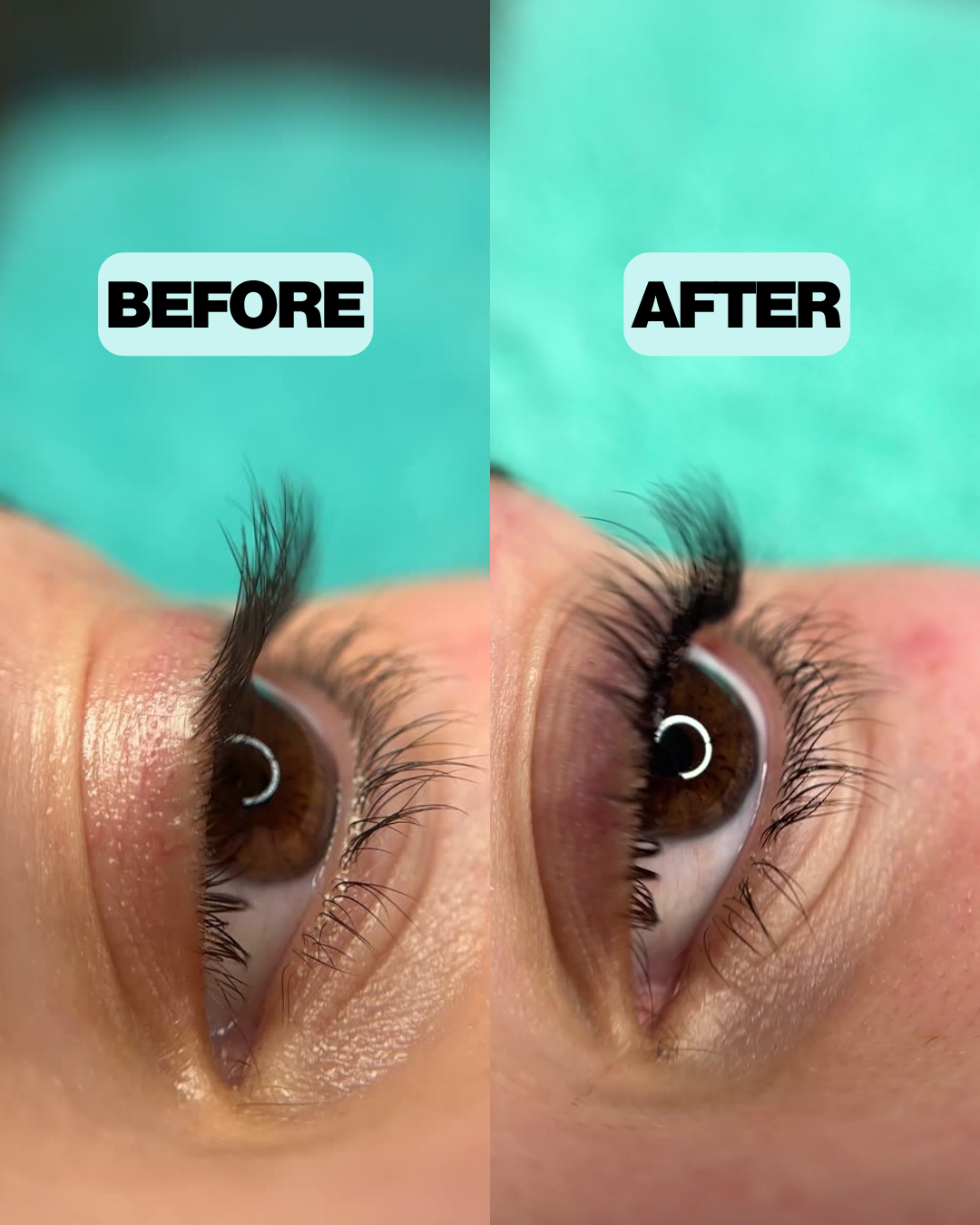
This result was created with Lash Filler + S-Powder, using Korean Techniques:
Why Technique Matters More Than Trends
A common mistake in the industry is believing that a new trend requires an entirely new chemistry.
In reality, great lash artists understand that results come from the relationship between:
Hair Biology
+
Chemistry
+
Technique
+
Professional Skill
A knowledgeable artist can adapt their approach based on the client's individual lashes rather than simply following what is trending online.
The Future of Lash Lift Innovation
The future of lash lifting is not about replacing one chemistry with another.
It is about giving professional artists more informed choices.
At InLei®, innovation begins with research, not trends.
Every new technology must be developed with the same priorities:
respect for the hair fibre,
professional performance,
predictable results,
education for artists.
After extensive research and development, InLei® is projected to launch a new cysteamine system in late 2026.
This development represents years of exploration into how cysteamine chemistry can be refined into a professional system that aligns with InLei®'s commitment to hair health and education.
The goal is simple:
To create a cysteamine system that prioritises safety without compromising results.
The Future Belongs to Educated Artists
The most advanced lash artists are not the ones who chase every new trend.
They are the ones who understand the science behind their services.
Because when you understand the chemistry, you can make better decisions.
For your clients.
For their lashes.
And for the future of professional lash artistry.